Showing posts with label best gynaecologists in Kolkata. Show all posts

Wednesday, 3 July 2019

Genetic Screenings for enhancing success of IVF

When an individual or couple is considering starting a family, a helpful tool can be taking a universal carrier screening test. These tests look at a large list of common genetic conditions through a blood or saliva sample. The test looks to see whether there are changes in an individual’s DNA that increase the chance of having a child with that genetic condition. Most individuals are carriers for a handful of genetic conditions, even if there is no family history.

Carriers are not expected to have any significant health risks. If both parents are carriers for the same condition, there is a 1 in 4, or 25% chance of having a child with the condition. These test results can help individuals, or couples, make the right choice for them when it comes to starting their family.

What is Preimplantation Genetic Diagnosis (PGD)?

As per AMRI Hospitals “When a parent or parents carry a mutation that puts them at risk for having a child with a hereditary disorder, preimplantation testing of embryos can diagnose an embryo as affected or unaffected and embryos which do not carry the affected gene can be selected for transfer and this process is called PGD".
It can significantly reduce the chances of having an affected child. It is typically done on patients who have no difficulty conceiving. Many couples know that they are at risk due to a family member with the disease, but some patients may be silent carriers. Preconception carrier screening can help identify patients and couples at risk for having a baby with a common genetic syndrome.

What is Preimplantation Genetic Screening (PGS or CCS)?

Preimplantation Genetic Screening is different from PGD because it is done on patients who do not carry a known disease-causing mutation, but wish to reduce their chances of chromosomal imbalance which could lead to miscarriage or a baby with an extra or missing chromosome, such as Down’s syndrome. As women age, their eggs are at higher risk of carrying a missing or extra chromosome. 

Preimplantation genetic screening of embryos can include all 24 chromosomes and is, therefore, sometimes referred to as comprehensive chromosome screening (CCS).
PGS can be performed in conjunction with a standard IVF cycle in any couple, but is typically considered in patients where the female partner is over 35 years of age. An additional benefit of PGS is that in improves our ability to choose the healthier embryos in a cohort, achieving a high success rate with a single embryo transfer and reducing the risks of twin pregnancies.

Monday, 1 July 2019

5 major Egg Freezing facts

1. Egg freezing is most effective if you freeze before you’re 35.

If there’s one egg freezing fact we want women to know, it’s this: freezing younger is always better. Women are born with all the eggs they’ll ever have, and as they get older, their egg count diminishes. At the same time, the eggs inside their ovaries are being exposed to all of the inevitable, but damaging forces of life: fevers, infections, stress, toxins, free radicals. This reduces their egg quality, or the state of the egg as genetically normal. So it’s a two-pronged process of fertility decline: as a woman ages, she has fewer eggs, and a lower percentage of the eggs she has left are genetically normal and able to create a healthy pregnancy.

That’s why, though there’s no strict egg freezing age limit, it’s a fact that egg freezing is most effective before 35, when a woman’s eggs are healthier and more plentiful. Not only will she produce more eggs per cycle, making it easier to freeze enough eggs for a good chance at pregnancy, the eggs she freezes are more likely to result in a healthy pregnancy later.

2. Egg freezing technology has improved drastically in the past decade.

Until a little over ten years ago, women who froze their eggs only had one option: slow freezing, a technique that’s, well, exactly what it sounds like. This process had a higher chance of causing damaging ice crystals to develop inside the egg cell, and only about 61% of eggs frozen using the slow freezing method survived the thawing process.

The fact about egg freezing is that speed matters. Today, advanced cryopreservation labs use vitrification, a much faster “flash freezing” technique that reduces the temperature of the egg to the required -196ÂșC in less than a minute, reducing the chance of ice crystals forming inside the cell. Eggs that go through vitrification have an approximately 90% survival rate.

3. Freezing eggs won’t affect their ability to create a healthy pregnancy.

One of the best studies on egg cryopreservation (or egg freezing) examined the health and pregnancy rates of frozen and “fresh” eggs from young egg donors in in vitro fertilization cycles. The study randomly assigned 600 couples to use either fresh donor eggs or frozen donor eggs for IVF. Pregnancy rates were nearly equal for both sets of couples, regardless of whether they used fresh or frozen donor eggs, demonstrating that freezing eggs doesn’t affect their ability to result in a healthy pregnancy.

4. If you freeze 10–20 eggs before you’re 35, that gives you a 70–90% chance of motherhood using those eggs later.

Of all the facts about egg freezing, this is one we’re asked about most often: does egg freezing really work?

The short answer is yes. Individual success rates typically depend on two factors: a woman’s age at the time she freezes (see egg freezing fact #1) and how many egg she freezes. Older studies suggested that, for women under 35, freezing between 10 and 15 eggs would offer a 61–85% chance of motherhood using those eggs later.

5. Egg freezing is the best—and only—technology currently available to preserve a woman’s fertility.

The fact is, there’s no “anti-aging” treatment for your ovaries. Some new studies suggest that stem cells might have some promise as a way to generate new eggs that can develop into offspring. But this research, while really exciting to experts in human reproduction, is really in its infancy. Egg freezing, on the other hand, is a generally safe and effective technique based on highly tested and established science, offering the best (and currently only) way for women to be proactive about their fertility health.

For more information contact us at –https://www.amrihospitals.in/specialty/ivf-centre

Saturday, 15 June 2019

Symptoms, Types & Risk Factors of Ovarian Cancer

Ovarian Cancer, the fifth most common cause of cancer deaths in women, is severe a type of medical condition which begins in the ovaries. It is mainly caused due to an abnormal and uncontrollable growth of cells in the ovary, explain gynaecologists at AMRI Hospital, one of the best maternity hospitals in Kolkata.

Who is at the risk of ovarian cancer?

Although ovarian cancer can affect women of any age, it is mostly common in those over the age of 50. Every woman, on an average suffers from 1.38% risk of suffering from ovarian cancer in her lifetime.

Studies show that ovarian cancer usually goes undetected until it spreads within the pelvis and abdomen. It becomes difficult to treat this disease in the latter stage, as it progresses rapidly with time, warn gynaecologists at AMRI Hospitals. Timely detection and treatment of ovarian cancer in the initial stage makes it more likely to be treated successfully.

What are the types of ovarian cancers?


  • Ovarian low malignant potential tumor (OLMPT)
  • Germ cell tumors
  • Sex cord-stromal tumors
  • Epithelial ovarian cancer (EOC)
  • What are the symptoms of ovarian cancer?
  • Constant pain or cramps in the belly or back
  • Unusual bleeding from the vagina, queasiness and bloating
  • Eating disorders or abnormal fullness after eating
  • Changes in appetite (often a loss of appetite)
  • Exhaustion, constipation and issues related to digestion
  • Irregular menstrual cycle
  • Heartburn and back pain
  • Pain during sexual intercourse
  • An increased urge to urinate
  • Increase in the abdominal girth


The severity of ovarian cancer makes it important to keep a check on the symptoms of the disease, and undergo a timely treatment in order to combat it.

What increases the risk of developing ovarian cancer?


  • Genes/family history of ovarian cancer
  • Excessive weight
  • The use of certain fertility drugs or hormone therapies
  • Inability to conceive
  • Endometriosis
  • Inherited mutations in the BRCA1 and BRCA2 genes

Tuesday, 19 March 2019

7 Secrets to Keeping Your Kidneys Healthy


High blood pressure, diabetes or a family history of kidney failure put one in three Americans at an increased risk of developing kidney disease. But even if you don’t fit in any of those risk categories, it’s important to take care of these critically important organs.
  1. Hydrate, but don’t overdo it. “Contrary to popular belief, no studies have proven over-hydration as an effective practice in enhancing kidney function. So, while it’s always a good idea to drink enough water, drinking more than the typical four to six glasses a day probably won’t help your kidneys do their job any better.
  2.  Eat healthy foods. Your kidneys can tolerate a wide range of dietary habits, but  points out that most kidney problems arise out of other medical conditions like high blood pressure and diabetes. Because of this, he suggests you follow healthy, moderate eating habits to control weight and blood pressure. Preventing diabetes and high blood pressure will help keep kidneys in good condition.
  3.  Exercise regularly. If you’re healthy, getting your exercise is a good idea because, like healthy eating habits, regular physical activity can stave off weight gain and high blood pressure. But do be mindful of how much exercise you do, especially if you’re not conditioned.“Overexerting yourself when you’re not fit and healthy can put a strain on your kidneys, especially if you exercise so much that you cause excessive breakdown of muscle tissue.
  4.  Use caution with supplements and herbal remedies. Excessive amounts of certain vitamin supplements and some herbal extracts may be harmful to your kidneys. Talk to your doctor about any vitamins and herbs you plan to take.
  5. Quit smoking. Smoking can damage blood vessels, which decreases the flow of blood in the kidneys. When the kidneys don’t have adequate blood flow, they can’t function at optimal levels. Smoking also increases the risk of high blood pressure as well as the risk of kidney cancer.
  6.  Don’t overdo it when taking over-the-counter medications.“Common non-prescription pills like ibuprofen and naproxen (NSAID’s) can cause kidney damage if taken too regularly over a prolonged period. If you have healthy kidneys and use these medicines for occasional pain, they probably don’t pose a risk, that if you take them for chronic pain or arthritis, you should talk to your doctor about monitoring your kidney function or finding alternative ways to control your pain.
  7.  If you’re at risk, get regular kidney function screening. “If you have either diabetes or high blood pressure, your physician should screen for kidney dysfunction as part of routine care for those conditions,” Experts of AMRI Hospitals, Best Hospital in Eastern India.

The big kidney health takeaway

Often, your kidneys simply become affected by other medical conditions. The most important thing you can do to keep your kidneys safe is to take care of your body to reduce your chances of developing diseases that put a strain on your kidneys.

Friday, 1 February 2019

Abdominal Sagging After Pregnancy: Causes And Treatment


Diastasis Recti / Recti Split/ Abdominal separation
Diastasis Recti is a disorder usually seen in ladies during and post pregnancy. It is defined as the separation of the rectus abdominis muscle into right and left halves. Normally the two sides of the muscle are joined at the linea alba (a fibrous structure that runs down the midline of abdomen) at the midline of the body. (Tupler Techniques, 2013)
Diastasis of the muscle occurs:
• In newborn, when the abdomen is not fully developed. Usually seen with pre-mature births.
• In pregnancy or postpartum women due to stretching of the rectus abdominis by the growing uterus. It occurs more commonly in multiparous women (carrying more than one foetus) due to episodes of stretching of uterus.
• Women are more likely to develop diastasis recti when above the age of 35, high birth weight of the child, multiple pregnancies, and multiple birth pregnancies.
• Additional causes can be due to excessive abdominal exercises during the first trimester for pregnancy.
Signs & Symptoms:
• Excessive abdominal sagging
• A persistent gap between the rectus abdominis muscle (3 finger space or more)
• Abdominal pain
• Abdominal discomfort.
• Umbilicus protrusion.
• Flabby abdomen.
Treatment:
• It is one of the most commonly seen disorders, often mis-diagnosed as umbilical hernia.
• Adequate manual testing and physiotherapy exercises are proven to be most effective.
Exercises like:
– Core contractions
– Seated squeeze
– Head lift
– Upright push up
– Squats against the wall
– Kegels exercise are proven to be most effective
Consult doctors at Amri Hospitals, best gynecologist in kolkata for normal delivery

Friday, 28 December 2018

5 dangerous conditions that start with a cough


We all cough from time to time. Sometimes we simply have a scratchy throat, and especially during the winter months we cough due to colds and flu. We rarely pay too much attention to a cough and it usually goes away after a few days.
But when is a cough more than just a frog in your throat, or a symptom of the common cold? In serious diseases such as asthma, tuberculosis and chronic obstructive pulmonary disease (COPD) a cough is often the first indication that something is seriously wrong.
Due to intensive public awareness campaigns, many people are familiar with these disorders, but unfortunately not all dangerous conditions associated with a cough are “front of mind”. Here are seven dangerous conditions you should consider when you are suffering from a cough. Although some of these are rare, it’s worth checking them out.
1. Lung cancer
We know that smoking is a big risk factor for developing lung cancer, but even non-smokers can be at risk. Lung cancer starts when abnormal cells grow in the bronchial walls, according to a Health24 review. Coughing can be a sign of cancer and is caused by intrabronchial protrusion of the tumour. This lesion may change the character of sound in chronic coughers to a “brassy” sound. Research from the Sheffield Hallam University indicates that you should go to the doctor if a new cough persists for more than three weeks. At an advanced stage sufferers are likely to cough up blood, which is an urgent indicator that you should get medical attention.
2. Cystic fibrosis
Cystic fibrosis is an inherited disease characterised by abnormally thick, sticky mucus that prevents organs such as the lungs and pancreas from working correctly. According to The Cystic Fibrosis Foundation “the mucus clogs the airways and traps bacteria, leading to infections, extensive lung damage, and eventually, respiratory failure”. Thick sputum (substance produced by coughing or clearing the throat), and a chronic cough and wheezing are signs of this disease.
3. Atelectasis
Atelectasis occurs when one or more areas of your lungs collapse or don’t inflate properly. It can be due to an accumulation of mucus in the airways, and coughing might actually bring some relief. Coughing might be more severe than is normal for you, according to the National Heart, Lung and Blood Institute, and this can be an indicator of the condition.
4. Congestive heart failure
Some conditions cause immediate and noticeable harm, but other ones like congestive heart failure (CHF) usually develop over time. Sufferers’ hearts are unable to pump blood effectively and/or prevent blood from accumulating in the lungs. An early symptom of the disease is a dry, hacking cough, especially when lying down. A Health24 review shows CHF should not be ignored as it can lead to a heart attack, and ultimately death.
5. Sarcoidosis
Sarcoidosis is an inflammatory disease that affects many organs in the body. A study by the Foundation for Sarcoidosis Research found that it triggered heightened immunity, “which means that a person’s immune system, which normally protects the body from infection and disease, overreacts and damages the body’s own tissues”. When sarcoidosis affects the lungs (also called pulmonary fibrosis) inflammation can scar lung tissue leading to reduced oxygen levels. A dry cough that persists, and struggling to breathe are potential signs of this disease.
SOURCE – Health24

Thursday, 27 December 2018

7 surprising facts about pregnancy


Your body undergoes a lot of physical transformations when you’re expecting. We rounded-up 7 surprising facts about pregnancy you might not have known.

1. Your Uterus can grow as big as a watermelon

During the course of your pregnancy, your uterus stretches from the size of a peach to roughly the size of a medium watermelon. That’s about 500 times its normal size. Understandable why you can’t fit in your pre-pregnancy jeans!

2. Your feet can grow an entire shoe size

Extra fluid and water retention can cause a pregnant woman’s feet to grow up to one full shoe size. The expansion is gradual and therefore many women don’t notice this.

3. Your heart gets bigger

The size of your heart as well as its position also changes with pregnancy. Due to the uterus expanding, the diaphragm is pushed upwards which in turn pushes the heart further up in the chest cavity. The actual size of your heart increases by about 12% during pregnancy.

4. You lactate at the sound of a crying baby

Pregnant woman and new mothers can lactate automatically when they hear a baby crying from about the second or third trimester. This happens even if the baby is not yours.

5. You smell everything

Pregnant women really do experience a heightened sense of smell. This is basically the body’s way of steering them away from food that would be bad for the baby. This explains the food cravings too!

6. You become very limber

Pregnancy stretches women’s bodies significantly, a hormone called relaxin, which is supposed to relax the joints and stretch our ligaments also gets produced which explains this fact.

7. Your heartburn makes your baby’s hair grow

Ever heard about how pregnant women who experience heartburn give birth to babies with more hair? Well, there is scientific evidence to suggest that this might actually be true.
SOURCE : LivingandLoving

Wednesday, 26 December 2018

Have a happy and healthy pregnancy


Opting for a variety in your dietary choices is always advisable, as it not only ensures that the mother gets enough nutrition, but also, satisfies her taste buds.

Pregnancy is a phase in life, not an illness that one has to worry about. With proper care and regular check-ups with the doctor, it is safe to say that it is, hands down, the most beautiful and magical phase of life. Healthy and balanced diet is always important, but its prominence escalates during pregnancy. Maintaining a healthy diet and exercise routine is a must as this is the time when your body requires additional nutrition in order to sustain the other tiny little life that’s growing inside you.
“‘Eat more, you’re now eating for two’ was what everyone used to tell me during my pregnancy, and frankly, I used to feel hungry all the time,” says Anusha, a young mom in the city. But, that is not necessary. “Definitely, you’re bound to feel hungrier than before, but that doesn’t mean you have to stuff yourself. Instead, one can eat smaller portions of food frequently,” she adds.
Fruits and veggies, for example, contain many important nutrients, especially, vitamin C and folic acid that is a must have for all the pregnant ladies. Breads, grains and beans together ensure the presence of iron, vitamin B, carbohydrates etc., in the food.
So, all the mommies-to-be, here is a list of must-have foods that your diet should include
Fruits and veggies
Make sure that your tummy gets enough fresh fruits and vegetables as they are rich sources of vitamins, minerals and fibre, which play an important role in the development of the baby and also helps maintain the immunity levels of the mother.
Starchy foods
Bread, cereals, maize, millets, oats, potatoes etc., are important additions to your meal. Choose wholegrain or fibre-rich ones over the regular options as these foods have the capacity to fill your stomach, without incorporating calories into it.
Dairy supplements
Calcium is one of the most important nutrients that are essential for the baby at this stage. Milk, yoghurt, cheese, etc., help strengthen the bones, both of the mother and baby. Diary alternatives like soya drinks and unsweetened yoghurts can also come in handy at times.
Healthy in-betweeners
It is normal for a pregnant lady to feel hungry between meals. At such times, it is healthier to opt for vegetable soups, sandwiches, fruit or sprouts instead of eating your way through chips or other fatty foods.
SOURCE – TelanganaTimes

Tuesday, 25 December 2018

Winter pregnancy care: 5 diet and nutrition tips for expectant mothers


Expecting a baby truly is one of the most exciting experiences of a woman’s life – perhaps, it’s the happiest moment in a couple’s life. But the news of pregnancy can come with a lot of physical stress. The hormonal changes combined with physical changes can take a toll on a woman’s body. A foetus is like a parasite in your body. You will be surprised to know that the foetus will take all the nutrients from your body to fulfill its needs. Hence, it is important to eat well as you need to be nutritionally fit postpartum to take care of your newborn.
Some of the nutrients that are of prime importance in pregnancy include calcium, iron, protein, vitamins, and minerals. You also need to make sure that enough vitamin D goes in through diet and sunlight. Fortunately, there are some super foods that one can consume this winter and fill stores. At the same time for your knowledge, there are some nutrients that are stored and some that are to be taken on a daily bases. We give some diet tips that may help pregnant women eat healthy, ensuring that the baby gets the best start possible.
  1. Chulai/Amaranth: Seeds and leaves are a very good source of calcium. One can have ladoo made from amaranth seeds. The leaves of this plant are rich in calcium and fibre.
  2. Fish: It is loaded with protein and a rich source of vitamins which increase immunity and help to fight infections, including the ones common in the winter season such as common cold and fever. You can eat it as soup or broth form.
  3. Turmeric: A half inch of raw turmeric boiled in water can give you relief from body ache and increase immunity. Turmeric, also known as Haldi, is considered as a super food for its incredible health benefits.
  4. Cauliflower greens: The leaves of cauliflower that we normally throw away contain the highest content of iron and fiber among all green leafy vegetables. It can be boiled and added to soup, chapatti dough, dals etc.
  5. Jaggery: Jaggery is a winter superfood. Sugarcane juice is heated in iron containers because of which it is high on iron content. Jaggery or Gur-based sweets should be our preferred option when a sugar craving strikes but in controlled quantity.
By adding these super foods to your diet, one can achieve optimum health and wellness.
Please note that supplementation may be required in case of severe deficiencies. Also, to play safe, you should consult your gynecologist before trying out any exercise or meditation.

Monday, 24 December 2018

16 Weeks Pregnant Symptoms


SYMPTOMS

More reason to celebrate: There are some 16 weeks pregnant symptoms that are actually good. For example, some moms-to-be find their hair and nails grow faster. Your hair might actually look thicker and more lustrous and your skin might look radiant, too. Woo hoo! Here’s more of what you might be feeling at 16 weeks pregnant:

  • Backaches. Your aching back is a side effect of pregnancy hormones. To ease backaches, make some time for low-impact exercise. Sit and stand up straight and regularly stretch your body.
  • Bigger boobs. Your breasts have probably gone up several cup sizes by now, and should be completely prepped for breastfeeding by the end of the second trimester.
  • Constipation. Getting, um, stopped up is an unfortunate result of your uterus starting to press on your intestines. Load up on fiber-rich foods and drink lots of water to keep things moving.
  • Forgetfulness. This is also known as #PregnancyBrain. No one knows for sure what causes pregnant women to become more forgetful. It could be biological or it just could be a result of having lots on your mind!
  • Dry, itchy, sensitive eyes. Blame the hormones once again! You could try over-the-counter eye drops, but be sure to consult your OB before choosing one.
  • Glowing skin. Finally—that pregnancy glow that people are always talking about. Va va voom!
16 WEEKS PREGNANT BELLY
If you’re sixteen weeks pregnant with twins, your symptoms probably won’t be different than they would be for a mom carrying one baby at this point. You definitely want to keep your doctor posted on all your symptoms though, since a twin pregnancy is considered higher risk, so your doctor will want to keep close tabs on you and your babies.
Pretty soon, you’ll start feeling baby moving around in your 16 weeks pregnant belly. At first, those moves might feel like gas or a muscle twitch, but over time, as baby gets bigger and stronger, they’ll be unmistakable. If you’re 16 weeks pregnant with twins, you won’t feel kicks any earlier than a singleton mom-to-be will, but over time, twin moms definitely feel more kicking sensations.
Of course, feeling those movements comes with other issues, like having your lungs crowded by your growing babe. That could make it seem tough to catch your breath from time to time.
Inside your 16 weeks pregnant belly, baby’s listening to your voice, thanks to tiny bones forming in his or her ears. Your 16-week fetus is growing hair, lashes, and eyebrows. And his or her taste buds are forming.
You’ll probably have a four-month prenatal visit around the time you’re sixteen weeks pregnant. As usual, you’ll probably have a urine test; your OB will be checking your urine for signs of gestational diabetes and preeclampsia. You may have a 16 weeks pregnant ultrasound at your appointment too.
The best news of the week? Once your OB sees a normal 16 weeks pregnant ultrasound, your chance of miscarriage drops to only 1 percent. Breathe a sigh of relief!

Saturday, 22 December 2018

14 Weeks Pregnant Symptoms

SYMPTOMS

At 14 weeks pregnant, symptoms you felt in the first trimester might be fading. But don’t be surprised if they don’t vanish right away. Be patient and take it easy! Here are some new pregnancy symptoms you may be feeling at 14 weeks:
  • Round ligament pain. Yowch! You’re probably feeling some aches and pains as your muscles and ligaments stretch to accommodate your growing baby. At 14 weeks pregnant, cramps are often because of round ligament pain, but if you have any concerns, talk to your doctor.
  • Increased energy. As you emerge from the nasties of the first trimester, you’re probably getting your energy back. #ThankGoodness
  • Increased appetite. Tummy’s rumbling? Once morning sickness starts to go away, you might find your appetite on overdrive. Remember that what you eat is fueling baby’s rapid growth. You should aim to eat about 300 extra calories per day. If you’re 14 weeks pregnant with twins, you’ll want to eat about 680 extra calories per day now that you’re in your second trimester. Keep plenty of healthy snacks by your side just in case you get the munchies. It’s important—for you and for baby—that you don’t indulge in too many greasy, fatty foods, so you’re both getting the right nutrients. (Of course, the occasional bowl of ice cream is totally okay.)
  • Thicker, shinier hair. You might notice your hair getting thicker and shinier, one of the (few) attractive side effects of pregnancy.

14 WEEKS PREGNANT BELLY

Your 14-week pregnant belly might be feeling achy and sore, but that’s simply because your uterus is expanding to accommodate your rapidly growing baby.
Don’t be surprised if weight gain starts to speed up at 14 weeks pregnant. If you started out at an average BMI, doctors recommend you gain about one to two pounds per week starting at 14 weeks pregnant. If you’re 14 weeks pregnant with twins, your weight gain goal will be about the same as singleton moms until week 20 when you should start gaining a bit more. Of course, if you started out underweight or with a high BMI—or if you lost or gained a significant amount of weight in the first trimester—your doctor might recommend a slightly different weight gain goal.
If you found yourself shying away from exercise during trimester one, now that you have your energy back, it’s time to get back on track. Consider taking a prenatal yoga class or simply get that 14 weeks pregnant belly out for a walk!
Typically, there isn’t a 14-week ultrasound. You likely had an ultrasound in your first trimester and won’t have one again until the anatomy scan (a.k.a. mid-pregnancy ultrasound), which usually happens between weeks 18 and 22. The doctor will also use an ultrasound if you plan to have an amniocentesis (between weeks 15 and 20).
If you did have glimpse inside your 14 weeks pregnant belly, you would see that baby’s wiggling his or her toes in there and may even be thumb sucking!
A 14-week fetus’ kidneys are making urine, and the liver and spleen are doing their jobs too. You might be surprised to hear that baby at 14 weeks is growing lanugo, a thin, peach fuzz-like hair, all over—it’ll help keep the body warm!
At a 14 weeks pregnant ultrasound, baby’s gender might be difficult to make out. Be patient! If you want to find out if you’re having a boy or a girl, you will likely be able to find out in just a few weeks at the anatomy scan.

Friday, 21 December 2018

13 WEEKS PREGNANT SYMPTOMS

13 WEEKS PREGNANT SYMPTOMS

You might notice that around 13 weeks pregnant, your symptoms change a bit. You might actually be able to get through the day without nausea (if not now, soon) or feeling the need for a nap. But you may be experiencing a few of these too:
  • Visible veins. You can see all those blue streaks under your skin because you have increased blood flow.
  • Increase in energy. The second trimester is known as the least symptomatic—and the most energetic. As you start to feel more like yourself and get that energy surge, you’re going to want to knock a bunch of to-dos off your list. Also, if you’ve found yourself too sick and tired to exercise lately, now’s the time to get back to a fitness routine. Exercise will only benefit you and baby and can even make labor easier. Worth it!
  • Increased sex drive. If you’re one of those lucky pregnant women who feels up for a roll in the hay at 13 weeks, well… enjoy! You may notice a bit of post-coital spotting during pregnancy at 13 weeks. A little spotting is normal simply because your cervix is more sensitive. But heavy bleeding (like a period) isn’t, so call your doctor if it’s more like a flow.
Sorry, twin moms-to-be. If you’re 13 weeks pregnant with twins, you might still be experiencing some morning sickness and fatigue. That’s because twin moms can have more of the pregnancy hormone hCG in their systems. If your nausea and vomiting is super severe, definitely bring it up to your OB. If you’re able to hold down food and liquids, but you’re still feeling ill, just wait it out a little longer.

13 WEEKS PREGNANT BELLY

Your uterus is now big enough that it’s growing up and out of your pelvis. That means you’re starting to actually look pregnant. Finally, right? You’re a third of the way through and you finally get to demand a seat on a crowded train!
Expect to look more and more pregnant from here on out because pregnancy at 13 weeks calls for a weight gain increase. OBs recommend you gain weight in the healthiest way possible—that means slowly and steadily throughout your pregnancy. Here are the weight gain guidelines outlined by the American College of Obstetricians and Gynecologists (ACOG):
If you’re underweight (BMI under 18.5):
  • Your recommended total pregnancy weight gain is 28 to 40 pounds.
  • In the second and third trimesters, aim to gain about a pound (1 to 1.3 pounds to be exact) per week.
If you’re average weight (BMI of 18.5 to 24.9):
  • Your recommended total pregnancy weight gain is 25 to 35 pounds.
  • In the second and third trimesters, aim to gain about a pound or a little less (0.8 to 1 pound to be exact) per week.
If you’re overweight (BMI of 25 to 29.9):
  • Your recommended total pregnancy weight gain is 15 to 25 pounds.
  • In the second and third trimesters, aim to gain a little over a half pound (0.5 to 0.7 pounds to be exact) per week.
If you’re obese (BMI of 30 and above):
  • Your recommended total pregnancy weight gain is 11 to 20 pounds.
  • In the second and third trimesters, aim to gain about a half pound (0.4 to 0.6 pounds to be exact) per week.
If you’re 13 weeks pregnant with twins:
  • Your recommended total pregnancy weight gain is 37 to 54 pounds.
  • In the first half of your pregnancy, aim to gain about a pound per week. In the second half, aim to gain a little over a pound per week.
Of course, you don’t want to stress yourself out about these numbers. What’s important is that you’re eating a healthy diet full of a variety of different foods, eating about 300 extra (nutritious) calories per day more than you did pre-pregnancy and getting plenty of exercise.

Thursday, 20 December 2018

12 WEEKS PREGNANT SYMPTOMS


Here’s the good news about 12 weeks pregnant symptoms: morning sickness and fatigue may start to fade a bit soon, as your hormones start to calm down. The bad? Headaches and dizziness may replace them. We’ll take that trade-off. Here’s more info about what’s happening to your body at 12 weeks pregnant:
  • Increased discharge. This clear discharge might seem weird, but it’s normal and has an important purpose: to protect your vagina from infection. But if you have yellow, greenish, pink, or brown discharge during pregnancy week 12, call your doctor right away. Those colors could be a sign of infection or preterm labor.
  • Spotting. Spotting or bleeding during pregnancy at 12 weeks could be worrisome—or it could be nothing at all. For example, your cervix is more sensitive during pregnancy, so simply having sex could cause light bleeding that’s harmless. If you’re spotting or bleeding, definitely tell your doctor. If the bleeding is accompanied by cramping or the flow is heavy, it’s an urgent call.
  • Headaches. These may start to intensify around week 12 of pregnancy. Headaches may be caused by hormonal shifts, drops in blood sugar, dehydration, lack of sleep, or stress. To deal, pay attention to what might be triggering your headaches and try to avoid those culprits. If you notice a drastic increase in headaches or a type of headache you’ve never experienced before (such as a migraine), or if your headaches are accompanied by other weird symptoms, let your OB know.
  • Dizziness. Whoa! Hormone shifts and blood pressure changes could cause dizzy spells around pregnancy week 12. You can help prevent dizziness by snacking regularly and drinking plenty of water. Sit or lie down if you’re feeling dizzy or lightheaded and let your doc know about any severe bouts.
If you’re 12 weeks pregnant with twins, you may still be experiencing morning sickness, while your singleton mom-to-be counterparts are likely starting to see the light at the end of the nausea tunnel. Know that things will likely improve soon.

12 WEEKS PREGNANT BELLY

A 12 weeks, your pregnant belly is an official bump! In other words, it’s probably getting noticeable now. This is one reason many moms-to-be start to tell others they’re expecting around 12 weeks. (Of course, if you’re 12 weeks pregnant with twins, you may have been showing for weeks now, obviously because you’ve got double the baby in there!)
If you haven’t already, start taking photos of your pregnant belly at 12 weeks. Trust us, after pregnancy you’ll want a memento of how much your body changed throughout the nine months.
Your fetus at 12 weeks is almost done developing his or her body’s important systems and parts, which means it’s all about getting bigger and more mature from here on out. Yep, baby’s about to enter the growth and maturation stage, in which organs and tissues will grow and develop rapidly.
Baby at 12 weeks is opening and closing his or her fingers and curling toes. And baby’s brain is developing fast!
Baby’s now developing reflexes—if you poke your 12-week pregnant belly while looking at baby on an ultrasound, you’ll likely see movement. If you’re 12 weeks pregnant with twins, your twosome is developing at a similar rate as singleton babies at 12 weeks. Later on, they’ll have a slightly slower rate of growth.
You may have one more prenatal checkup before the end of your first trimester. Whether or not you have a 12-week ultrasound may depend on your doctor’s preference and maybe also on what your insurance covers. If you do get an ultrasound at this time, you’ll notice that you can see your 12-week pregnant fetus more clearly this time around, which may make you want to start spreading the news that you’re expecting.
Itching to find out if it’s a boy or a girl? We hate to be the bearers of bad news, but on a 12 weeks pregnant ultrasound, gender isn’t usually revealed. Between 12 and 13 weeks is the very earliest a boy or girl could possibly be seen on an ultrasound, and the anatomy is still difficult to make out with any certainty. Your OB or technician is much more likely to be able to see baby’s gender at the mid-pregnancy anatomy scan, which will happen around week 20. However, if you received DNA blood testing for chromosomal disorders, you may find out baby’s gender when you get those results—if you want to know, that is!
Around week 12, you might want to know more about baby’s health, so you may have genetic testing done to determine the risk of birth defects or other problems. This can be a little scary—and confusing—so be sure to ask your OB plenty of questions, and know that it’s much more likely baby’s A-OK than anything else.

Wednesday, 19 December 2018

11 WEEKS PREGNANT SYMPTOMS

11 WEEKS PREGNANT SYMPTOMS

Around 11 weeks, your body (and mind!) are still completely haywire. It’s probably tough to feel calm right now, since your hormones are still raging and you may still be feeling pretty nauseous. But know there’s light at the end of the tunnel—just a couple more weeks left in the first trimester, which is notoriously the worst for pregnancy symptoms! Here’s more about what you’re likely feeling at 11 weeks pregnant:
  • Fatigue. You’re beat, but you can expect a surge in your energy in trimester two. Until then, give yourself permission to kick back and get some extra rest.
  • Nausea. We get it. You’re sick and tired of being sick and tired. We promise you should start to feel more like yourself soon.
  • Gas (oof!). Sorry, but tummy troubles are par for the pregnancy course. Keep a close eye on your diet (if you’re able to hold anything down, that is) and try to avoid foods that make you gassy, such as beans, cabbage, fried foods, and desserts. Drink lots of liquids and fiber-rich foods too.
  • Mood swings. Try some mind/body exercises, like yoga, to help you feel more Zen. And if possible, avoid stressful situations (like that crowded family party—stay home with Netflix!).
  • Leg cramps. Tight, painful muscles can strike at night and interfere with your sleep. Drinking plenty of water can prevent leg cramps, and so can stretching your legs during the day. You also want to take a look at your diet to be sure you’re getting enough potassium and magnesium.
  • Skin darkening. One morning you might wake and think, Whoa! What’s that dark line down the center my belly and why is it there? Well, this is a totally normal pregnancy symptom called the linea nigra. This dark line is caused by hormonal changes and isn’t permanent—though you might notice that it sticks around for a while after you give birth, especially if you breastfeed. (Because of the hormones involved with breastfeeding.)
  • Vaginal discharge. Okay, so you’re probably going to want to invest in some pantiliners, because an increase in discharge can be expected through your pregnancy.
Women who are 11 weeks pregnant with twins often have elevated hormone levels, which may mean double the symptoms and higher weight gain. Both are normal, and you too should experience increased energy and decreased nausea in the coming weeks.

11 WEEKS PREGNANT BELLY

Your 11 weeks pregnant belly is starting to develop a full-on baby bump instead of just gas and bloating, but it can be hard to tell! Especially if it’s your first pregnancy, you might not be showing at 11 weeks. Women pregnant with their second babies and those who are 11 weeks pregnant with twins tend to start showing earlier than first-time moms-to-be.
While your belly may or may not be visibly changing, you may be surprised to see your boobs have noticeably changed. (Which may be welcome or unwelcome, depending on your preference!) We recommend you shop for some new, comfy, stretchy bras at this stage in the game. If you’re planning on breastfeeding, a nursing bra can be worn now and will come in handy after baby’s born. Plus, nursing bras are normally made to keep up with a changing bust size, and you probably have some more growing to do.
At 11 weeks, the chance of miscarriage might be on your mind. It’s tough not to worry—welcome to motherhood!—but know now that you’ve seen baby’s heartbeat, your miscarriage risk is down to just 3 percent. It will drop even lower over the next month or so.
You can’t see it, but baby’s moving fluidly and gracefully inside your 11 weeks pregnant belly. Your 11-week fetus has skin that’s see-through, but is on its way to becoming more opaque. At 11 weeks, baby’s fingers and toes aren’t webbed anymore. Tooth buds, hair follicles, and nail beds are forming too. Cool, huh?!
Right around now—between weeks 11 and 13—you may be getting a first trimester screen. This is a combo of a special ultrasound called a Nuchal Translucency Screening (NTS) and a blood test. During the 11 weeks pregnant ultrasound, the technician or doctor will measure the back of baby’s neck—an abnormal measurement could be a sign of a chromosomal abnormality. Then the blood test will screen for too-low or too-high hormone levels. Taking into account the results of both the NTS and the blood test, your doctor will tell you baby’s risk of having a chromosomal condition. Waiting for the results may be nerve-wracking, but knowing the results will likely give you peace of mind.
For women who are 11 weeks pregnant with twins, an ultrasound at this point would show the babies’ umbilical cords and either one placenta or two. If the babies share a placenta, the fetuses are probably identical twins. If they have two separate placentas, they may be identical or fraternal. Identical twins sharing the same placenta usually need more frequent check-ups to be sure they’re both getting enough nutrition. Yep, even in utero these siblings already have to learn to share!

Tuesday, 18 December 2018

10 Weeks Pregnant Symptoms

10 WEEKS PREGNANT SYMPTOMS

Wondering what to expect at 10 weeks pregnant? As baby grows, your ligaments and muscles are starting to stretch inside your 10 weeks pregnant belly, your breasts are getting bigger, and some other radical changes may be happening. Here are some of the most common 10 weeks pregnant symptoms:
  • Round ligament pain. Don’t be surprised if you start feeling some aches and pains in your abdomen as it stretches to accommodate your growing baby. While some moms-to-be don’t really get or notice them, others find these sensations—called “round ligament pain”— well, downright painful. If you’re 10 weeks pregnant with twins, round ligament pain could be even more noticeable. Let your OB know if your discomfort is intense or if you’re worried in any way about your 10 weeks pregnant symptoms.
  • Growing breasts. Your breasts have probably gotten bigger by week 10 of pregnancy, since they’ve been prepping for breastfeeding for weeks already!
  • Morning sickness. Nausea and vomiting are pretty common at 10 weeks pregnant. The good news is, they’ll likely subside soon after you hit the second trimester.
  • Mood swings. Changes in your hormones may be to blame for a roller coaster of emotions.
  • Fatigue. You’re zapped. Here’s why: Not only is your body working really hard to grow baby, but your sleep might be disrupted by some pretty weird dreams.
  • Increased vaginal discharge. An increased blood flow to your vagina coupled with an increase in estrogen production could cause more of a clear, odorless discharge called leukorrhea. Might seem a little gross, but this substance is simply nature’s way of getting rid of bacteria. If it’s colored, tinged with blood, has a foul odor, or causes discomfort, however, call your doctor. Those could be something else.
  • Visible veins. Those blue streaks serve an important purpose: They’re carrying a ton of extra blood to baby.

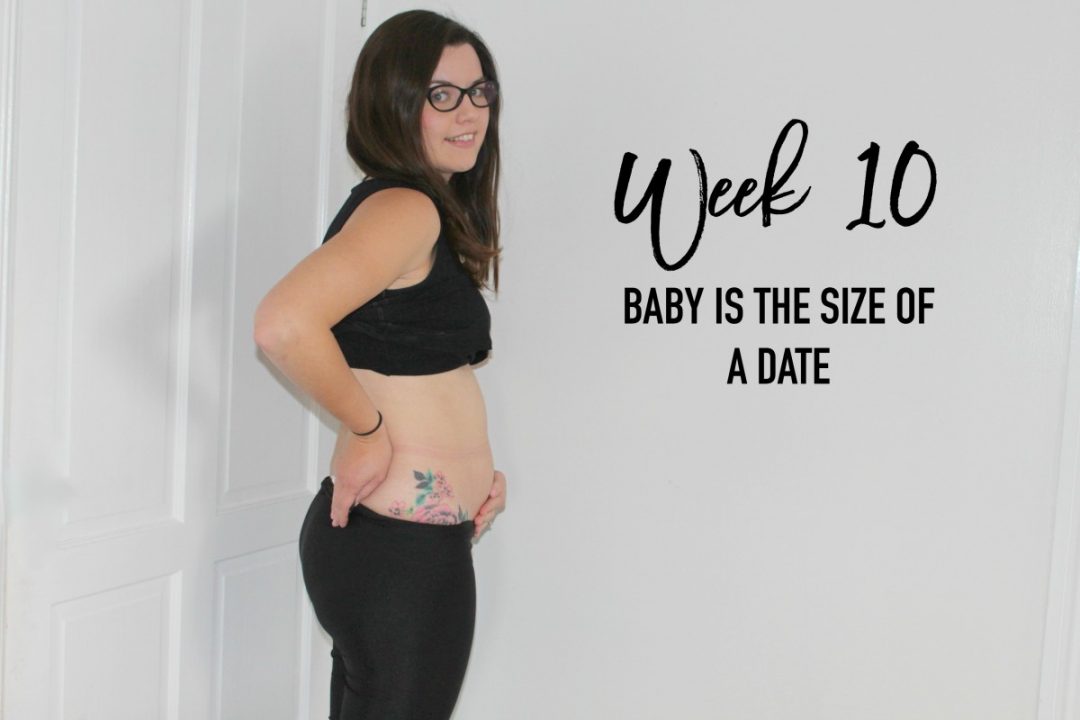
10 WEEKS PREGNANT BELLY

Your 10 weeks pregnant belly is probably just starting to show. That’s because your baby is continuing his or her rapid growth and so your tummy has started to develop some extra curve. You still might not look pregnant to people you meet, but you might need some pants with a stretchy waistband and some loose-fitting tops right around 10 weeks pregnant.
Many doctors recommend gaining about three to five pounds during the first trimester for pregnant women of average BMI. So you’re right on track if you find yourself at 10 weeks pregnant having gained a few pounds.
If you’re pregnant with twins, your doctor may recommend you gain about a pound per week in the first half of your pregnancy, which means you could have gained about 10 pounds by the time you’ve reached 10 weeks pregnant with twins. But don’t worry if you haven’t gained that much weight, or even if you’ve lost weight due to morning sickness. You’ll hopefully be able to put weight back on during the second trimester when the nausea decreases.
At ten weeks pregnant, baby has working arm joints, and cartilage and bones are forming. Your 10-week fetus’ vital organs are fully developed and they’re starting to function. Fingernails and hair are starting to appear too! And can you believe that baby’s busy practicing swallowing and kicking inside your 10 weeks pregnant belly?
Ten weeks is an important time if you’ve decided to have some first trimester genetic testing. Genetic testing is optional; which ones you choose to get—or not get—is up to you, but a genetic counselor can help you decide based on your family history and risk factors.
The nuchal translucency screening (a.k.a. NT Scan) typically happens between weeks 10 and 14; it tests your fetus for risk of Down syndrome and several other chromosomal abnormalities. For it, you’ll have a painless ultrasound, and baby’s nuchal fold (back of the neck) will be measured for signs of abnormality. The NTS is typically done as part of a “First Trimester Screen” where your blood is tested and your risk is assessed based on the results of both the ultrasound and the blood test.
A cell-free fetal DNA test, also known as a non-invasive prenatal test (NIPT) is a blood test given at week 10 or later. It screens mom’s blood for signs of risk for Down syndrome, Edward Syndrome, Patau Syndrome, and other chromosomal abnormalities.
Other, more invasive tests—the CVS and amniocentesis—can be used to diagnose abnormalities as well. They’re typically performed if you have a higher risk of having a baby with a chromosomal abnormality, whether based on family history, risk factors, or NTS or NIPT results. The CVS (chorionic villus sampling), given between weeks 10 and 12, uses an ultrasound to determine the placenta’s location. Then, using ultrasound as a guide, the doctor either uses a speculum inserted into your cervix or a needle through your belly to collect cells from the placenta. Those cells are tested for genetic abnormalities.

Monday, 17 December 2018

First Trimester : 9 Weeks Pregnant Symptoms


9 WEEKS PREGNANT SYMPTOMS

Right now, the pregnancy hormone hCG is circulating through your body at its peak level. That means at 9 weeks, some pregnancy symptoms may be at their most severe. Hang in there—you’re just weeks away from those hormones leveling out a bit, leaving you feeling a lot more like yourself. Here’s what 9 weeks pregnant symptoms you may be experiencing:
  • Mood swings. Because those hormones just keep raging, and also because other symptoms—such as nausea and fatigue—are bothering you, you may find your emotions more difficult to control. Remember that it’s okay to slow your usual pace, to take breaks (to nap, to meditate, or just to veg out and binge-watch Netflix), and to avoid stressful situations for the sake of your sanity.
  • Morning sickness. Up to 80 percent of pregnant women experience some form of morning sickness. It really should be called all-day sickness though! If you’re suffering from nausea, you might just be feeling a little ill, or you may be vomiting regularly. If you are 9 weeks pregnant with twins, you may find yourself with more severe morning sickness symptoms. The good and bad news is that at 9 weeks, morning sickness is likely at its worst. Do some trial and error to see what makes you feel better—many moms-to-be find that ginger, frequent meals and snacks, and vitamin B6 help ease nausea. You’re suffering now, but this too shall pass. You can get through this!
  • Frequent urination. Because your uterus is expanding and because there’s major blood flow to your pelvic area, you may be heading to the bathroom more often than you did pre-pregnancy. Don’t let that stop you from drinking lots of water. It’s important that you stay hydrated. Just put more pit stops onto your mental to-do list.
  • Fatigue. While your hormones are working overtime to grow and develop your 9-week fetus, you might be feeling totally zapped. Sleep more, if you can, and keep your blood sugar stable by snacking healthily throughout the day. In the second trimester, you’ll get some of your energy back.
  • Nasal congestion. Surprise! Pregnancy can cause higher mucus production in the body—an unexpected symptom—so you might need to keep tissues handy.
  • Headaches. Thanks again, hormones! Those surges can give you headaches—and so can dehydration, caffeine withdrawal, hunger, lack of sleep, and stress. Deal by treating your other symptoms, eating at least every few hours, getting plenty of sleep, and drinking lots of water. A warm or cold compress can ease a headache and so can rest. Before you take any medication, clear it with your doctor. Many say acetaminophen (Tylenol) is okay but aspirin and ibuprofen (Advil) aren’t. It will depend on your health history and any other medications you may be taking.

9 WEEKS PREGNANT BELLY

Many moms-to-be find themselves struggling to button their jeans at 9 weeks pregnant. Your uterus is expanding to accommodate your growing fetus. In fact, it has doubled in size! When you touch your 9 weeks pregnant belly, you’ll probably find that your lower abdomen feels a bit firmer—that’s the uterus. You may even be showing a bit at 9 weeks! Your uterus will begin to grow out of your pelvis in coming weeks.
Weight gain at 9 weeks isn’t just okay—it’s recommended. How much weight your doctor recommends you put on during pregnancy will depend on your pre-pregnancy body mass index (BMI). For example, if you started out with an average BMI, you will likely be told to put on a total of 25 to 35 pounds total during pregnancy—about three to five pounds of that should happen in the first trimester. If you’re 9 weeks pregnant with twins, you should aim to put on about a pound per week right now.
That said, so many moms-to-be are riddled with morning sickness and food aversions when they’re 9 weeks pregnant that they might not be gaining weight—they may be losing it! Naturally, you’ll want to talk to your OB about any concerns you have with your weight gain or loss—and definitely let him or her know if it’s sudden or drastic. But most doctors will tell you that minor weight loss is okay at this stage of the game. Once you begin getting your appetite back, you’ll have an opportunity to get your weight gain back on track.
There are also pregnant women who get nausea so severe they need medical treatment. Hyperemesis gravidarum (HG) is diagnosed when a pregnant woman is so sick she’s dangerously dehydrated. If you can’t seem to keep any liquids down, are losing a significant amount of weight, or if you’ve fainted, you should tell your doctor, who will do a physical exam to see if you have HG.
The good news is that there are treatments for HG. You may need an IV to replenish your fluids, and you and your doctor may choose to try a prescription anti-nausea medication to help stop the vomiting.
The first prenatal appointment typically happens between weeks 8 and 12. So by now, you may have visited the OB—if not, you will soon! At that first appointment you may even see baby’s tiny heartbeat on the ultrasound. Exciting stuff, huh?
A 9 weeks pregnant ultrasound is typically done transvaginally. That means the doctor or ultrasound technician will have to insert a probe into your vagina, since your uterus still sits behind your pelvic bone. (Don’t worry—it doesn’t hurt!) The probe will emit sound waves, which will allow you to see an image of your 9-week fetus on a screen.
Not only will you catch a glimpse of baby—who will resemble a lima bean—but the 9 weeks pregnant ultrasound will also confirm that the pregnancy is uterine (which means there are no signs of ectopic or tubular pregnancy at 9 weeks). The doctor may point out the gestational sac, the yolk sac, and the fetal pole.
That’s right, week 9 of pregnancy is a milestone: Baby’s no longer an embryo—now he or she is a fetus! These two terms simply define different phases of development. The embryonic phase is about forming major organs, including the brain, heart, and lungs, plus the arms and legs. Once you’ve got a fetus, those organs and parts are formed and are now growing and developing.
Inside your week 9 pregnant belly, baby’s working on that cuteness—developing more distinct facial features. And baby might now have a strong enough heartbeat to be picked up by a fetal doppler. At 9 weeks pregnant, miscarriage risk is on a lot of women’s minds. Rest assured that once you’ve seen or heard a heartbeat, the risk is only 3 percent. In coming weeks, it will lower even more.
Other prenatal tests you can expect around 9 weeks pregnant include blood work to test for hormone levels, blood type, white and red blood cell counts, and certain diseases. You’ll also have a pap smear to check for abnormalities (which can be signs of cervical cancer) and STDs, and a urine test to check that the protein levels and hormone levels seem healthy. All that poking and prodding will totally be worth it when you’re holding your newborn baby. All in good time!