Showing posts with label best neurology hospitals in Kolkata. Show all posts

Wednesday, 15 May 2019

An Active Brain makes a stronger person. Here are 10 Most Effective Ways to enhance your mind functioning


Stimulate your mind

Cognitive stimulation helps in regeneration of brain cells, further developing neurological “plasticity” and also preventing cell loss. Perform activities such as reading, painting, or playing instruments, that require both physical and mental work to help stimulate your mind.

Exercise

Whether it is the hectic everyday life or simpe lethargy that stops you from exercising, you are indirectly affecting your mental strength as well. Muscle movements can help your mind and being inactive can hamper the efficiency, plasticity, and adaptive potential of your brain. 

Eat healthy

Having a healthy diet and keeping your body adequately nourished will lead to a stronger and better mind. Include fruits, fish, nuts, unsaturated oils, and proteins from various plant sources, helping you develop mental cognition, and reduce the risk of conditions such as dementia, Alzheimer’s, etc, suggest diet experts at AMRI Hospitals, the best neurology hospital in Kolkata.

Keep your cholesterol under control

Research shows that high cholesterol (LDL) can increase the risk of dementia. Maintaining cholesterol levels through exercise, diet or even medications can enhance your mental activity.

Avoid alcohol and tobacco

Alcohol and tobacco are related to accelerating physical and mental stress. Therefore, such substances should be avoided.

Avoid stress and rumination

For people suffering from anxiety, depression or any other form of mental trauma, therapies such as CBT can help in supporting their mental, social and psychological well-being.

Ensure adequate  amount of sleep

Sleeping for at least 7-8 hours a day helps your brain work quicker and more accurately. Also note that sleeping in excess is as bad as not having adequate sleep. Sleeping is essential for your brain as it also sieves out harmful toxins.

Meditate

The most effective way to rejuvenate your brain and relax your overall body is by meditating regularly. Meditation also reduces stress levels, makes you think more clearly and helps strengthen your brain’s ability to focus.

Laugh more often

Laughter therapy is said to be the best way to keep your brain function effective. The release of endorphins boosts the overall immune system, and energy level, besides helping to reduce stress and trigger positive effects on your body.

Keep learning new things

Keep learning new things as it helps keep specific areas of your brain working, making it more flexible.
These are some of the best ways to care for your mental health and lead a healthier, positive life. Follow these tips to help stimulate effective brain functioning, keeping yourself more active and focused.

Thursday, 25 April 2019

AMRI Hospitals Bhubaneswar launches social media campaign to spread awareness this ‘World Malaria Day’


In a bid to spread awareness about Malaria, AMRI Hospitals Bhubaneswar has launched a social media campaign ahead of the World Malaria Day. The hospital aims at uniting everyone for the fight against Malaria to save precious lives that are lost due to this disease.
World Malaria Day is celebrated every year on 25th April to educate the people about Malaria and help prevent the fatal disease from spreading. The WHO (World Health Organization) has also called for a major emphasis on the efforts to fight against Malaria.
Malaria is caused by Malaria Plasmodium Parasites, which can spread to humans through the bite of an infected female Anopheles mosquito called ‘malaria vectors’.  When this mosquito bites, a parasite is released into the bloodstream. The symptoms of malaria, such as fever, headache and chilling effect appear in 10-15 days after the bite of an infected mosquito. The best way to prevent this disease is to use insecticide-treated mosquito nets and indoor residual spraying.
In 2017, nearly half of the world’s population was at risk, as 87 countries had ongoing malaria transmission. As per the World Malaria Report of November 2018, there were 219 million cases of malaria in 2017, as compared to 217 million cases in 2016. The estimated number of deaths due to malaria reported in 2017 were 43,000, a number similar to the previous year.
With increasing cases of Malaria, it is important for the healthcare providers to ensure quality treatment for the people. Likewise, it is equally important for the public to have appropriate knowledge of the disease to prevent Malaria from spreading.
The awareness campaign launched by AMRI Hospitals Bhubaneswar will aim at spreading awareness by reaching out to as many people as possible. Health experts believe that the knowledge of preventive measures can play a major role in reducing the number of cases and save precious lives from the wrath of Malaria.

Thursday, 9 August 2018

Eastern India Intensifies Dengue Surveillance


Dengue has widened its grip across India in the last couple of years. The number of deaths resulting from outbreaks of this disease has been increasing, especially in densely-populated areas of the country.
More than half the Indian states were affected by the deadly disease in 2017. Delhi, Maharasthra, Karnataka, Tamil Nadu, West Bengal, and Kerala were the worst-affected regions. To address the dengue situation in Eastern India, primarily West Bengal, AMRI Hospitals in Kolkata has started an awareness campaign on social media, with the tag #AMRIagainstDengue, as well as created adequate medical facilities to address patients afflicted with the disease.
The disease, which hits its peak between July and November, has a lot of serious implications not just for the health of individuals but also for healthcare facilities. This year as well, the conditions are pointing towards a possible outbreak in Eastern India. However, the government administration as well as private healthcare enterprises like AMRI have created a buffer to counter the disease at the very ground level. In addition to the mobile care units in Kolkata by the West Bengal government, there also has been sufficient awareness initiative in the region to combat the very basic problems associated with Dengue.
On that line, AMRI has been particularly proactive with their social channels — publishing news, social posts and campaigns. In addition to their social work, AMRI Hospital Dhakuria has also planned to organize an Anti-Dengue month throughout August. Doctors at AMRI Hospitals have also geared up to combat any critical situation.
The spurt in dengue cases in the twin city of Bhubaneswar and Cuttack has belied the claims of the civic administrations of maintaining cleanliness. Apart from the poor sanitation, prolonged monsoon and low-pressure rains have also added to the woes.
Here are a few facts you must know in order to beat dengue –
Aedesaegypti mosquitoes are responsible for spreading dengue. They breed in stagnant, fresh water. When the mosquito bites a person, the virus is passed into the blood stream, causing complications.
A person only gets symptoms after 7 to 10 days of getting bitten by an infected mosquito. It causes severe joint pain, nausea, abdominal cramps, fever, bleeding from gums, nose or ear.
Some patients also develop hemorrhagic fever that may cause death from shock or even cause multiple-organ failure. These complications make it a deadly disease.
In the last few years, dengue outbreaks were reported from a number of countries across the tropics, putting 3.5 billion people at risk of infection.
Around 390 million people get infected with dengue in more than 100 countries. Children and the elderly are more vulnerable to this disease.
According to the medical practitioners at AMRI Hospitals, early management of symptoms can prevent complications. People often get treated symptomatically, which is good.
There is a need to get tested if symptoms last for 2–3 days or get worse with every minute. Although dengue has no cure, the symptoms can be managed if things are controlled at the earliest.

Tuesday, 26 June 2018

ALL WHAT YOU NEED TO KNOW ABOUT CEREBRAL STROKE


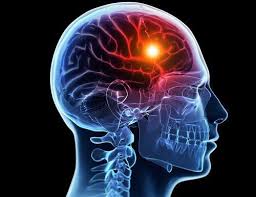
A Stroke (brain attack) is a severe medical condition which claims a number of lives every year. Studies show that one person dies of stroke every 36 seconds in India. Medical experts at AMRI Hospital, one of the best multispecialty hospitals in Kolkata, explain that strokes mainly occur due to a blockage in an artery that supplies blood to the brain. It leads to the brain not functioning properly.

WHAT HAPPENS DURING A STROKE?

Strokes cause the death of a section of the brain due to loss in blood supply. The death of certain brain cells results in the loss of functions controlled by them. According to a team of Stroke specialists at AMRI Hospital, one of the best neurology hospitals in Kolkata, this usually results in a person’s incapacity to carry out motor functions. It also causes aphasia (the inability to speak) in some cases.

TYPE OF STROKES

There are majorly three types of cerebral strokes which cause different medical conditions:
  • ISCHEMIC STROKE

The most common type of a cerebral stroke which is caused due to an obstruction within a blood vessel supplying blood to the brain. Studies show that it accounts for more than 85% of all strokes cases.
  • HAEMORRHAGIC STROKE

Haemorrhagic stroke is caused when a blood vessel bursts and bleeds in the brain. It’s due to two types of weakened blood vessels — aneurysms and arteriovenous malformations (AVMs). High blood pressure (hypertension) is one the most common causes of a haemorrhagic stroke.
  • TRANSIENT ISCHEMIC ATTACK (TIA)

Also known as a ‘mini stroke’, TIA is caused due to a temporary blood clot in the brain.

WHAT ARE THE COMMON SIGNS THAT INDICATE THE RISK OF A CEREBRAL STROKE?

  •   Confusion or inability to understand
  •   Severe headaches without any known cause
  •   Weakness and dizziness
  •   Problems related to vision (loss of vision in one of both the eyes)
  •   Numbness of the face, arm, or leg (especially on any one side of the body)
  •   Issues related to balancing or coordination
  •   Difficulty in walking/movements
  •   Transient Ischemic Attack (TIA), or “mini-stroke”
  •   Loss of consciousness
  •   Sudden nausea, vomiting, or fever (not caused by a viral illness)

WHAT ARE THE MOST COMMON FACTORS WHICH RESULT IN CEREBRAL STROKES?

  •  Uncontrolled high blood pressure
  •  Smoking: Smokers have double the risk of ischemic stroke as compared to the non-smokers
  •  Family history of cerebral stroke
  •  Migraines

TREATMENTS FOR STROKEMEDICAL STROKE TREATMENT

One of the most common treatments which is based on a drug known as TPA (Tissue Plasminogen Activator), which breaks down the blood clots in case of an ischemic stroke. The treatment is effective in improving the patient’s recovery after the stroke. However, AMRI Hospital medics warn that this treatment is not suitable for everyone and can be used only in certain cases.
  • ENDOVASCULAR STROKE TREATMENT

Endovascular Stroke Treatment is used when the drugs are not able to break the clot adequately. The doctor performs an angiography of blood vessels of brain and uses a catheter to remove the clot through specialized tools.
  • SURGICAL STROKE TREATMENT

This procedure is usually used in case of a haemorrhagic stroke. Along with repairing the damage, it helps in preventing the problem in future. Surgical Stroke Treatment involves the removal of clot on affected artery through a surgery. However, Catheterization is used in case the damaged artery is not easily accessible for the surgery.
SOURCE: healthmilis.com