Showing posts with label orthopaedic surgery. Show all posts

Thursday, 20 June 2019

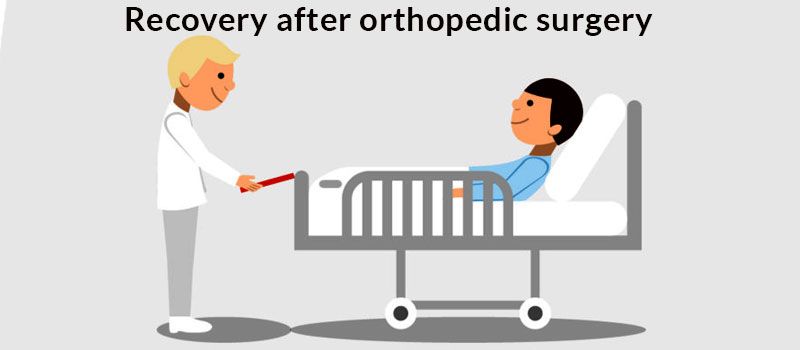
Tips For Faster Recovery From A Orthopedic Surgery

State of the art technologies, modern-day premium techniques, and some world-class orthopaedic specialists and surgeons make us one of the most advanced and preferred orthopaedic care centres today.  Recovery from orthopedic surgery can take a lot of time, but there are some tips you can follow up to make the process go as quickly as possible. Here are some of the basic but effective tips for recovering quickly from an AMRI Hospitals orthopedic specialist :


1) Strictly Follow Post-Operation Instructions
Immediately after the surgery, you will most likely receive a set of specific instructions from your orthopedic surgeon and then you have to meet with a physical therapist to establish a rehabilitation program. It’s important to follow the instructions and recommendations of the doctor/physician and don’t hesitate to ask questions if you don’t understand what you are asked to do.

2) Regularly Go To Your Follow Up Appointments
It’s important to get your progress monitored by the doctor/physician and get your plan tweaked and customized, if there is a need.

3) Perform Rehabilitation Exercises
Your physician will determine your rehab program based upon your situation and set your exercise progression based upon your improvement. Again, for the best outcomes, it’s important to follow strictly as recommended by your physician.

4) Get Proper Nutrition
Eating well after surgery is surely going to help your body heal faster. Some of the foods that doctors/physician recommend includes lean protein (red meat, chicken or fish), dairy, and fresh citrus depending upon the type of surgery you have gone through. Vegetables are nutrient-rich, so keep in mind to eat plenty of green leafy plants including spinach.

5) Sleep Tight
While we sleep our body repairs tissues which promotes healing, so be sure to get at least eight hours of quality sleep each night.

6) Take Proper Medication
After surgery you are most likely be on some sort of pain medication. Talk to your doctor about how and when to take these medicines, and if you should add some multivitamins or other supplements to your daily rehabilitation plan.

7) Ask for Help
After surgery, you will be less mobile and will probably need help with your daily activities. Don’t hesitate to ask for help from your friends and family.

Uteshiya Medicare utilizes the most technologically advanced machining and finishing capabilities for the manufacturing of Orthopedic implants and devices. We are India’s most trusted manufacturers and supplier of customized Orthopedic Implants used in Spine, Trauma, Sports Medicine, and Maxiofacial applications.
Thursday, 7 March 2019

Is young India falling prey to orthopedic problems?

Lack of physical activity, low exposure to sun, poor eating and living habits and a high paced life full of stress, all these markers point to an increasingly dangerous threat our young generation is falling prey to – that of weak bones and early onset of osteo-arthritis.
Increasingly, we are getting more patients under 35 years of age with neck related, knee related or other joint related problems; some of the most common problems being reported by the young include knee pain due to early onset of osteo-arthritis and neck pain, primarily because of long hours of sitting in front of computers and televisions.
Lack of exercise and very limited sun exposure means that people are growing up with weaker bones. All this points to the fact that something is going wrong with the way we are living. And if efforts are not made to break this unhealthy cycle of life, long term impact might be dangerous,visit ortho oncologist in kolkata.
Hectic schedules and endless tasks, or wrong priorities I might say, leave little time for people to spare for some essential components for life. Basking in the sun, taking an evening stroll to a park, or spending some time stretching yourself; we keep pushing all these for some other good time.
However, to make sure we have a healthy tomorrow, our young generation should make some key alterations to their present ways of living.
Whenever we receive a young patient complaining of joint or neck pain, our first question to them is about their working patterns and lifestyle and in almost all cases they reveal a life that lacks in physical activity and sun exposure.
Osteoarthritis, a  degenerative joint disease involves degradation of the condition of joints mostly caused due to loss of cartilage and may cause stiffness, locking or pain. When the cartilage around the bone wears out, it leaves the bone of the joint extremely vulnerable to damage.
More often than not, such bone related disorders were associated with older people, but an increasing number of cases of young people presenting with osteoarthritis is indicative of the fact that our young generation has discarded certain crucial components of life – like exercising, playing and taking the right diet.
The young workers of today spend long hours sitting in the same positions, mostly in a wrong posture, at office and do not realize the importance of motion for the joints of the body. Walking or cycling is no longer considered viable; and once they return home they spend the remaining hours of the day watching television.
Lack of exercise and physical activities are most glaringly responsible for weaker bones and early joint related problems. Change in life style leads to unhealthy diet and increased stress at family and at work places.
Bone is living tissue which keeps on growing constantly, old bone tissues are continually replaced by new ones, but the process slows down by the age of 30. People having poor calcium intake, low sun exposure, exposure to polluted water and adulterated food products and sedentary lifestyle, may tend to start bone depletion.
If young people who are their productive best fall to health problems like osteoarthritis or osteoporosis, this may put a great health burden on the country.
Osteoporosis is characterized by low bone mass that increases bone fragility and raises a person’s susceptibility to fracture. Osteoporotic fractures, the study said, occur commonly in both sexes in India, and may occur at a younger age than in the West.
Poor sunlight exposure, skin pigmentation and a vitamin D-deficient diet were identified as some reasons and the study highlighted the need public health measures right from childhood.
Therefore, call of the hour is to take up this issue at a serious note. This primarily entails identifying and involving all those who can play a role in bringing about a behavioral change like promoting consumption of calcium and vitamin D rich diet and exposure to sun right from childhood.

These decision makers may be fitness trainers at schools, health practitioners in hospitals, fitness counselors at healthcare centers at Amri Hospitals, Best Hospital in Kolkata
Youth should be motivated and educated to adopt a healthy diet and lifestyle. Education is must, but for the health and overall development of our young generation sporting activities should be given importance in our education system. Sports not only benefits them in maintaining good health but also inculcates leadership qualities and also gives them self confidence.
Doctors could contribute by making it a point to underline the importance of physical activity, balanced diet and sun exposure, while counseling patients. When it comes to bone health, prevention is inarguably the best thing to do.

Wednesday, 6 March 2019

What is Orthopedic Trauma


Orthopedic trauma is a broad term describing all kinds of injuries affecting the bones, joints, muscles, tendons, and ligaments in any part of the body that are caused by trauma. The term is wide-ranging and may refer to minor fractures or severely broken bones with a direct threat to the patient’s life. It is considered as a sub-specialty of orthopaedic surgery, ortho oncologist in kolkata and is focused on treating fractured bones and making sure the injured part of the body regains its original strength and maximum function it used to have prior to the injury.

Cause of Condition

The many different types of orthopedic trauma are classified based on the affected body part.
  • Upper extremity injury, which includes a broken arm or wrist, collarbone, or ribs
  • Lower extremity injury, which includes a broken ankle, hip, or legs
  • Soft tissue injury, which affects the muscles, tendon, and ligaments
The most common causes of traumatic injuries are:
  • Falls
  • Twisting the ankle
  • Sporting accidents
  • Other types of accident
  • Severe coughing
  • Blows to specific parts of the body
Some people also have a greater propensity to broken bones after a fall or accident. For example, a person suffering from osteoporosis, a condition wherein the person’s bones are weak and fragile, can easily break a bone even with a minor fall or slip. Some people may also suffer from conditions that affect their eyesight or their balance, causing them to fall more frequently and raising their risk of injury.
Additionally, bones do not always break the same way. The break can occur in a straight line, diagonally, or in a spiral manner. Bones can also break into several pieces and, in open fractures, they may stick out of the skin.

Key Symptoms

Trauma to the bones and soft tissues that fall under orthopedic care may be accompanied by several possible symptoms, depending on which part of the body is affected. The most common symptoms of a broken limb or body part include:
  • Swelling
  • Tenderness
  • Bleeding, but only if the break in the bone damages the skin
  • Major bruising
  • Inability to move the affected part without experiencing pain
  • Bone sticking out at an abnormal angle
  • Bone sticking out of the skin
  • Numbness
  • A pins and needles sensation if some nerves are injured
  • Inability to lift or rotate the injured part
  • Inability to put any weight (for leg injuries)
  • Severe pain when breathing in (for broken ribs)
  • Shallow breathing
  • A grinding, cracking, or snapping noise is heard at the time of the fall or accident
Minor injuries are sometimes difficult to treat, as there are cases where there’s no sign of a broken bone. Thus, patients don’t go straight to the emergency room. However, it is best to get checked up after a fall or accident to make sure there are no fractures.
Regardless of the severity of the injury, during the ride to the hospital, Amri Hospitals Best Hospital in Kolkata it is important to keep the injured body part stable by using temporary slings. Meanwhile, applying an ice pack to the injured area will help reduce the pain and inflammation. If the pain is unbearable, over-the-counter pain relievers may be taken; some examples are paracetamol and ibuprofen. If there is nobody to drive the patient to the hospital, it is best to call for an ambulance. If there is a bone sticking out at an odd angle, no attempt should be made to re-align it. If there is an open wound, it should be covered with a clean cloth and pressure must be applied to minimize the bleeding.

Who to See and Types of Treatments Available

Orthopedic trauma is treated depending on its severity. Those who have minor injuries such as fractures can be easily treated by general orthopedists, although in some cases, the expertise of fracture specialists may become necessary. However, some types of trauma such as multiple broken bones and fractures in sensitive locations such as near the joints or affecting the pelvis may require trauma specialists.
Orthopedic trauma uses both surgical and non-surgical techniques to treat the affected bones and soft tissues. Minor fractures and dislocations of specific bones such as the scapula, humerus, and clavicle, among others, can be treated non-surgically through an external fixation method. This means that orthopedic devices such as casts, braces, and splints are placed outside the body to keep the injured part stable during the recovery period.
Surgical means, on the other hand, include:
  • Minimally invasive surgery
  • Conventional surgery
  • Internal fixation method, which refers to surgically installing orthopedic devices on the bone itself
The following procedures are reserved for more severe injuries and may be done either conventionally or through minimally invasive techniques.
  • Bone grafting and bone/joint transplantation
  • Bone-forming
  • Limb lengthening
  • Lower limb joint reconstruction, such as hip and knee replacements
  • Upper extremity reconstruction
  • Soft tissue repair
Orthopedic trauma is usually followed by a long recovery period, depending on the severity of the injury and the affected body part. The shortest recovery period is usually three weeks for minor injuries. Arm or wrist injuries, as well as a fractured collarbone, may take 6 to 8 weeks to heal, while ankle injuries may take up to 6 weeks. There are also cases in which the bone fails to heal, leaving a permanent injury. However, the healing time tend to be shorter in children, whose bones heal more quickly. Most patients recovering from orthopedic trauma are advised to undergo a post-treatment program to avoid joint or muscle atrophy, which may occur as a result of long periods of inactivity.
Among all types of orthopedic trauma, one of the longest to heal is a broken hip, which is especially dangerous for the elderly. Many individuals find it difficult to regain their original condition after suffering a fracture in the hip bone, and studies show that there is a 1 out of 3 fatality rate within 12 months post-injury among people who experience hip fractures; in many cases, the death is caused by a pre-existing illness that may or may not have been aggravated by the injury.

Saturday, 2 March 2019

Causes of Knee Pain and Treatment Options


Knee pain is an extremely common complaint. While unpleasant and frustrating, the upside is that knee pain is often a very treatable problem.
Diagnosing your knee pain first requires a focused medical history, consult Amri hospitals, Best hospital in Bhubaneswar one that sorts out the details of the pain, like what it feels like (e.g. aching, sharp, or burning), where it’s located (e.g. front of or behind the knee), when it started (e.g., gradually or suddenly), and whether there was any recent trauma (e.g. blow to the knee).
Besides a medical history, your doctor will perform an examination of the knee joint and potentially order imaging tests to make or confirm a diagnosis.
In the end, understanding the precise cause of your knee pain is key to you and your doctor formulating an effective treatment plan—one that optimizes the knee healing process.

Causes

Your knee is a complex structure consisting of three bones—the lower part of the thighbone, the upper part of the shinbone, and the kneecap. Then, there are strong ligaments and tendons that hold these bones together, as well as cartilage beneath the kneecap and between the bones to cushion and stabilize the knee. Damage or disease that affects any of these structures may lead to pain.

If you have knee pain, some common causes include:

Knee Arthritis
There are different types of arthritis that affect the knee joint, the two most common ones being osteoarthritis and rheumatoid arthritis.
  • Knee osteoarthritis develops as a result of “wear and tear” of the cartilage in the knee and is more common in people over the age of 50. As the cartilage deteriorates, pain develops, often gradually escalating from a sharp pain that worsens with knee movement to a constant dull, aching pain.
  • Rheumatoid arthritis is an autoimmune disease whereby a person’s immune system attacks multiple joints in the body. In addition to pain, swelling, redness, and warmth over the kneecap may develop. Unlike osteoarthritis, knee pain from rheumatoid arthritis tends to improve with activity.
Knee Ligament Injuries
There are four ligaments in your knee—two collateral ligaments and two cruciate ligaments.
Collateral Ligament Injury
The collateral ligaments (medial collateral and lateral collateral) are found on the side of your knee and connect your thighbone (femur) to your lower leg bone. Injury to the medial collateral ligament (MCL) often results from a direct blow to the outside of the knee, which causes pain on the inside of the knee. A blow to the inside of the knee may cause a lateral collateral ligament (LCL) injury, which causes pain to the outside of the knee.
Cruciate Ligament Injury
The cruciate ligaments (anterior cruciate and posterior cruciate) cross each other inside the knee joint, with the anterior cruciate being in the front and the posterior cruciate being in the back. Anterior cruciate ligament injuries are the most common type of knee injury, often resulting from a direct blow or a sudden change in direction or speed when running. Usually, a “popping” noise is heard, along with sudden swelling, and a giving out of the knee.
Posterior cruciate ligament injuries are uncommon and are generally caused by some sort of high-energy force to the knee (for example, a bent knee colliding with the dashboard during a car accident). Besides pain at the back of the knee, knee swelling and stiffness are typical symptoms associated with this ligament injury.
Torn Knee Cartilage (Meniscus)
There are two “C” shaped, tough pieces of cartilage (called menisci) located between your thighbone and shinbone. Tearing of the meniscus is a common cause of knee pain and may occur in young people (often during sports) or older people, as the cartilage weakens with age making it more prone to tear. Besides pain, a person with a meniscus tear may initially hear a “pop” when the tear occurs. This is followed by a gradual development of knee stiffness and swelling, along with knee clicking, locking, or catching.
Patellar Tendonitis and Tear
Patellar tendonitis refers to inflammation of the patellar tendon—a large tendon that connects your kneecap to the top of our shinbone. Patellar tendonitis is most common in people who engage in sports or activities that require frequent running and jumping. Often times, people with this condition describes a constant dull pain that becomes sharp with activity.
Patellar tendonitis weakens the patellar tendon, making it more likely to tear. A patellar tendon tear causes severe pain, swelling over the knee, and a tearing or popping sensation. Depending on the degree of the tear, a person may notice an indentation at the bottom of the kneecap and experience walking difficulties due to the knee giving out.
Patellofemoral Pain Syndrome
Patellofemoral pain syndrome is most common in adolescents and young adults and is usually caused by vigorous activities that put stress on the knee, like running, squatting, or climbing stairs. This condition causes a dull, aching pain felt underneath the kneecap. Abnormal knee alignment may also cause or contribute to this condition. Besides pain, which worsens with activities that require frequent knee bending or sitting for long periods of time (for example, working at a desk), a person may note popping sounds in the knee when standing up from prolonged sitting or when climbing stairs. Knee swelling and locking are rarely seen with this syndrome.
Chondromalacia Patella
In some people with patellofemoral pain syndrome, a condition called chondromalacia patella is present, which means that the cartilage behind the kneecap has softened and begun to wear away. It develops as a result of overuse (i.e. bending the knee too much) or from a knee injury. Symptoms include pain, either sharp or aching, located in front of, around, and/or behind the kneecap.
Baker’s Cyst
A Baker’s cyst is swelling in the back of the knee joint and is sometimes a sign of another underlying problem such as a meniscus tear. While not all Baker’s cysts cause pain, if they do, the “tightening” pain is felt in the back of the knee and is often associated with knee stiffness and a visible bulge that worsens with activity.
Prepatellar Bursitis
Your prepatellar bursa (a fluid-filled sac) is located right over the kneecap. Prepatellar bursitis—when the bursa becomes inflammed— is most commonly caused by people who frequently kneel, like gardeners or carpet layers. Less commonly, an infection, gout, rheumatoid arthritis, or a direct blow to the knee may cause bursitis. Besides a mildly aching knee pain that may only be felt with knee movement or when touching the affected area, rapid swelling over the kneecap typically occurs.
Iliotibial Band Syndrome
Iliotibial band syndrome refers to inflammation of the iliotibial band—a thick collection of fibers that runs along the outside of the thigh. Iliotibial band inflammation commonly happens as a result of overuse, especially in runners, and causes an aching, burning pain on the outside of the knee joint. Sometimes, the pain spreads up the thigh to the hip.
Visit Amri Hospitals, Best Hospital in eastern India

Wednesday, 20 June 2018

Joint replacement: Advantages & disadvantages of undergoing the surgery


Joint replacement is a procedure of orthopaedic surgery, in which an arthritic or a damaged joint is replaced with a metal, plastic or ceramic device called prosthesis.
In India, more than one lakh joint replacement surgeries are conducted every year, and the numbers are only increasing. “Initially, all these surgeries were conducted through traditional methods, wherein a large incision was made around the damaged joint,” a health practitioner at one of the orthopaedic hospitals in Kolkata states.
However, the techniques have changed with advancement in technology. Today, MIS (minimally invasive surgery) is used to carry out the surgery, by making small incisions around the affected area.
MIS technique not only prevents blood loss, but enables quick recovery after the surgery. This technique is used in all the top multispecialty hospitals in Kolkata, Delhi, Chennai, Mumbai and other states of India.
A number of patients tend to delay joint replacement surgery, especially in India. They suffer from a lot of pain and reduced mobility, but do not undergo the surgery due to the fear of pain, a long rehabilitation process and many other reasons. But, the advantages of undergoing the surgery are often underestimated by the patients. Here are some of the advantages and disadvantages of joint replacement surgeries:
Advantages  
  • The main advantage of joint replacement surgery is the relief from pain. After the surgery, a patient doesn’t experience pain as the affected part is removed and replaced with an implant.
  •  It also increases the mobility of a patient. A patient is able to walk freely, climb the stairs, sit in different positions and perform most of the day-to-day activities.
  • It increases the overall quality of life. With a damaged joint, you will never be able to live your life up to its full potential. But, after the replacement surgery, you can get more involved in different aspects of your life with your family, neighbours and colleagues.
Disadvantages
  • There is always a chance of infection or blood clotting, especially if you are diabetic or a heart patient. Also, the surgery may not be profitable if you have a weak immune system.
  • Other major risk, according to the health practitioner at an orthopaedic hospital in Kolkata is that the joint may not work as per your expectation. It may feel stiff and your knees may appear weak while performing different activities.
  • If you don’t undergo a proper rehabilitation process, you will not be able to regain the mobility you are looking for.
  • Although the chances are less, but it is possible that your implant may become loose or get dislocated. Apart from this, you will most probably need to undergo another surgery after 20 years.
There are many advantages and disadvantages of joint replacement. However, it all depends on the severity of the problem and the rehabilitation process. If everything is planned in advance and executed efficiently, the chances of success will increase.
SOURCE: Apsense