Showing posts with label best orthopedic hospitals in Kolkata. Show all posts

Tuesday, 13 August 2019

What is Osteoporosis and how it can be treated?

Our bones are complex living tissue comprised of a thick outer shell (known as the cortex) and a strong inner honeycomb mesh of tiny cross-members (known as the trabeculae). This structure enables our bones to be strong, lightweight and somewhat flexible. These properties are important because they allow our skeletons to support us while being able to cope with the stresses and strains that we impose upon them in the course of day-to-day life.

During the first two decades of life our skeleton grows, reaching what is termed Peak Bone Mass – the point when our bones are at their most dense – in our early 20s mentions AMRI Hospitals. In the middle period of life, a continual process of repair is ongoing which ensures that old worn-out bone is replaced by fresh new bone.

In later life or when specific medical conditions occur in people in their middle years – the balance between old bone being broken down (known as resorption) and new bone being made (known as formation) can be lost. When there is more resorption than formation, the total amount of bone in the skeleton begins to decline and bones become more fragile. This is particularly common for women who have experienced the menopause, because oestrogen plays an important role in maintaining the balancing act of this process known as bone remodelling. For significant numbers of men it should be noted that, after 70 years of age, loss of bone density is also an issue.

When a person’s bone density drops below a specific level a diagnosis of osteoporosis will be made.

Treatment of osteoporosis

Calcium

Calcium is an important component of bone. Therefore, it is important that we eat sufficient calcium to maintain our skeletons, but there is no evidence that taking more than this is helpful. There is controversy regarding what is an adequate intake, recent evidence suggesting that as little as 500 mg/day (2 servings of dairy products) is sufficient in adults, though some experts still recommend 1000 mg/day, or more. Many older people find it difficult to take 1000 mg/day in their diets, so use supplements. However, there are now several safety concerns related to calcium supplements, and the consensus is that calcium from the diet is to be preferred. People ingesting at least 2 servings of dairy products daily are likely to be receiving enough calcium.

Vitamin D

Vitamin D is a substance made in the skin as a result of sunlight exposure. It facilitates absorption of calcium from the diet. When vitamin D levels are very low, mineralisation of bone is impaired. Individuals who never go outside (e.g. frail elderly), those who are veiled, and those who have dark skin are at risk of vitamin D deficiency, so might benefit from a vitamin D supplement. The use of supplements by those who are not deficient does not improve bone health. Most healthy European New Zealand adults living independently do not require vitamin D supplements.

Monday, 12 August 2019

Bone problems women face during pregnancy

Bone problem during pregnancy is a commonly occurring problem because the growing baby in the mother’s womb needs plenty of calcium. Bone problems are especially at peak during the last three months of pregnancy. Most commonly occurring bone problems during pregnancy include joint pain, pubic pain and tailbone pain mentions AMRI Hospitals


Joint Pain during Pregnancy

Joint pain during pregnancy is characterised by soreness, stiffness or pain the elbows, knees, finders, hips and other joint areas. One of the main causes of joint pain during pregnancy may be attributed to pregnancy weight gain, which can put strain on the joints. Joint pain is usually common in women, who are pregnant with their first child. Exercising a lot may also put pressure on the joints. Another reason for joint pain during pregnancy could be hypothyroidism.

Pubic Bone

When the body of a woman prepares for child birth, it releases a hormone named relaxin, which softens and loosens the ligaments. In the process, ligaments in the pelvis get stretched and loosened up in an attempt to create space for the baby’s head. Pubic pain is usually felt during pregnancy when there is a misalignment of the pelvis or there is excessive movement of the pubic symphysis. Usually, the midline cartilaginous joints create a 2-3 mm gap, which at pregnancy widens up to 9mm and causes discomfort and pain. The weight of the baby puts strain on the muscles causing severe pain.

Tailbone Pain or Lower Back Pain

Tailbone pain or coccydynia is usually experienced by pregnant woman when the fetus has grown enough to put pressure on the tailbone area to cause them to move beyond their limited range of motion. A major reason for this pain is the release of the hormone relaxin. The loosening of the joints causes the tailbone to shift from its position, thereby causing pain. Tailbone pain may be at its peak a few weeks or days before delivery as the baby’s head may put extra pressure on the bone.

Remedies for Bone Problem during Pregnancy

•  Doing certain types of yoga asanas can help in preventing or reducing bone problems during pregnancy. Consult your physician or a yoga expert to know the kind of yoga asanas you should practise for tailbone pain. 

•  Using hot compress and ice bags can help give some relief to the bone. 

•  Using herbal oil to massage the painful area can help relieve the pain.


Thursday, 20 June 2019

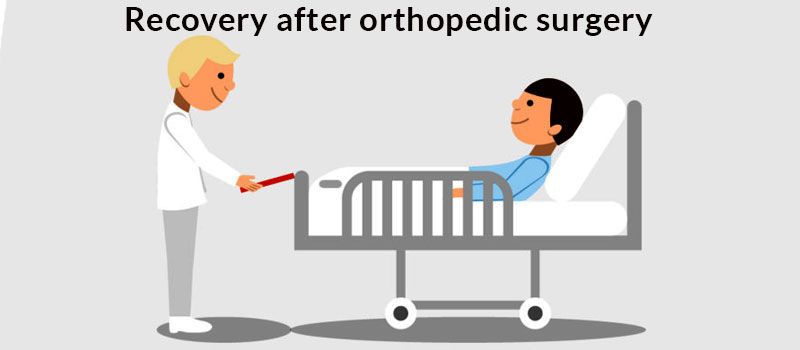
Tips For Faster Recovery From A Orthopedic Surgery

State of the art technologies, modern-day premium techniques, and some world-class orthopaedic specialists and surgeons make us one of the most advanced and preferred orthopaedic care centres today.  Recovery from orthopedic surgery can take a lot of time, but there are some tips you can follow up to make the process go as quickly as possible. Here are some of the basic but effective tips for recovering quickly from an AMRI Hospitals orthopedic specialist :


1) Strictly Follow Post-Operation Instructions
Immediately after the surgery, you will most likely receive a set of specific instructions from your orthopedic surgeon and then you have to meet with a physical therapist to establish a rehabilitation program. It’s important to follow the instructions and recommendations of the doctor/physician and don’t hesitate to ask questions if you don’t understand what you are asked to do.

2) Regularly Go To Your Follow Up Appointments
It’s important to get your progress monitored by the doctor/physician and get your plan tweaked and customized, if there is a need.

3) Perform Rehabilitation Exercises
Your physician will determine your rehab program based upon your situation and set your exercise progression based upon your improvement. Again, for the best outcomes, it’s important to follow strictly as recommended by your physician.

4) Get Proper Nutrition
Eating well after surgery is surely going to help your body heal faster. Some of the foods that doctors/physician recommend includes lean protein (red meat, chicken or fish), dairy, and fresh citrus depending upon the type of surgery you have gone through. Vegetables are nutrient-rich, so keep in mind to eat plenty of green leafy plants including spinach.

5) Sleep Tight
While we sleep our body repairs tissues which promotes healing, so be sure to get at least eight hours of quality sleep each night.

6) Take Proper Medication
After surgery you are most likely be on some sort of pain medication. Talk to your doctor about how and when to take these medicines, and if you should add some multivitamins or other supplements to your daily rehabilitation plan.

7) Ask for Help
After surgery, you will be less mobile and will probably need help with your daily activities. Don’t hesitate to ask for help from your friends and family.

Uteshiya Medicare utilizes the most technologically advanced machining and finishing capabilities for the manufacturing of Orthopedic implants and devices. We are India’s most trusted manufacturers and supplier of customized Orthopedic Implants used in Spine, Trauma, Sports Medicine, and Maxiofacial applications.

Friday, 15 March 2019

1ST LIVER SURGERY IN AMRI HOSPITALS,MUKUNDAPUR


A 32-year-old man from Kushtia, in the neighbouring country of Bangladesh, was detected with carcinoma of the sigmoid colon in 2017. He had undergone Anterior Resection, a common surgery for rectal cancer, followed by Adjuvant Chemotherapy (FOLOX Regime) in 2017. After being in regular follow up at a cancer centre in Dhaka, he came to AMRI Hospital, Mukundapur, Best Onco Hospital in Kolkata for a second opinion from Dr. Suvadip Chakrabarti, Senior Consultant, Surgical Oncology.
On evaluation, Dr Chakrabarti advised a serum CEA, along with a PET CT scan. A 5 X 4.5 cm bio avid lesion was located in segment VIII of the liver and a Fine-Needle Aspiration Cytology (FNAC), a diagnostic procedure used to investigate lumps or masses under the skin, was performed, which was suggestive of Metastatic Adenocarcinoma. The doctor advised that the patient undergo surgery with a second option of Stereotactic Body Radiation Therapy (SBRT). Taking into count the risk and armed with a proper planning, Dr Chakrabarti performed Segment VIII hepatic resection, backed by the anaesthesia team, headed by Dr. Sougata Pal.
Liver segmentectomies are highly specialized and rare surgeries and are being performed only at cancer centres that are properly equipped and have surgeons with the expertise for such surgeries. Armed with CUSA & LigaSure, the ultra-radical surgery was performed. After a successful surgery, the patient was able to start the advised diet from Day Two and was discharged on Day Seven.  
This is the first Liver surgery to be performed at AMRI Hospitals, Mukundapur, and the first of many more radical surgeries to be performed under the auspices of the hospital’s excellent Department of Surgical Oncology, which is on its way to become a Centre of Excellence on its own.

Tuesday, 5 March 2019

Is It a Sprain or a Strain? Tips for Identification

Overview
If you’ve ever tried to define sprains and strains but can’t quite identify the difference between the two, you’re not alone. These two terms are often used interchangeably to describe overstretching or tearing of soft tissues in and around your joints. There is a key difference, and knowing what that is can help you differentiate between joint sprains and strains.
Symptoms
A joint sprain is the overstretching or tearing of ligaments. Ligaments are the bands of tissue that connect two bones together in a joint. The most common location for a sprain is the ankle joint.
A joint strain is the overstretching or tearing of muscles or tendons. Tendons are the dense fibrous cords of tissue that connect bones to muscles. The most common locations for a muscle strain are the hamstring muscle and the lower back.
The symptoms of a sprain and a strain are very similar. That’s because the injuries themselves are very similar. It’s no wonder the two conditions are frequently confused.
Common symptoms of sprainsCommon symptoms of strains
• bruising
• pain around the affected joint
• swelling
• limited flexibility
• difficulty using the joint’s full range of motion
• muscle spasm
• pain around the affected joint
• swelling
• limited flexibility
• difficulty using the joint’s full range of motion
The main difference is that with a sprain you may have bruising around the affected joint, whereas with a strain, you may have spasms in the affected muscle.
Causes
Our bodies work hard day after day, so an occasional strain or sprain isn’t uncommon. Certain situations make you more likely to injure your joints. These include:
  • athletic activities or exercise, including running or jogging
  • accidents, such as falling or slipping
  • lifting heavy objects
  • overexerting yourself
  • sitting or standing in an awkward position
  • prolonged repetitive motion
Most commonly affected joints include:
commonly affected joints
Risk factors
Anyone at any point can experience a sprain or strain, but certain risk factors increase your odds for overstretching a joint. These risk factors include:
  • Being out of shape. Lack of proper conditioning leaves your muscles and joints weak and unable to fully support your movements.
  • Using improper equipment. Equipment that is worn out or ill-fitting will increase your risk for a sprain or strain. It’s important you keep your shoes and any necessary gear maintained.
  • Not warming up. Warming up and cooling down after exercise or athletic activity helps you prevent injury. Warming up gently stretches the muscles and increases your range of motion. A cool down stretch helps strengthen your muscles for better joint support.
  • Being tired. When you’re tired, you don’t carry your body properly. Being tired means you’re less likely to practice good form. Schedule days off between exercise so your body can rest and heal.
  • Your environment.Wet, slippery, or icy surfaces are treacherous for walking. These aren’t risk factors you can control, but being aware of when they’re around will help you avoid an injury.
Diagnosis
Doctors often diagnose a sprain or strain by excluding other causes for your symptoms. After a brief physical exam, your doctor may request an X-ray. An X-ray will rule out any breaks or fractures.
If the X-ray isn’t conclusive, your doctor might request another type of imaging test called an MRI. An MRI can give your doctor a very detailed view of the joint. An MRI might reveal very small or thin breaks that an X-ray can’t identify.
If neither the MRI nor X-ray reveals any breaks or injuries to the bone, your doctor will likely diagnose a sprain or strain.
Visit Amri Hospital Best ortho oncologist in kolkata

Tuesday, 26 February 2019

Here’s how AMRI Hospital’s NRI Privilege Health Card saves your healthcare costs


Medical tourism has become a good option for NRIs to save healthcare costs nowadays. It’s an affordable option, as well as a good opportunity to visit their motherland. Patients often fly to other countries for various ailments, orthopaedic problems, cosmetic surgeries, looking for better better treatment facilities at lower costs.
AMRI Hospitals, one of the best hospitals in Kolkata, is offering the NRI Privilege Health Card with various benefits to Indians living in different part of the globe. Launched during the North America Bengali Conference (NABC) from 29th June to 1st July, 2018, at Atlantic City, in the US, AMRI’s health card offers comprehensive healthcare services to the NRI’s at low costs.
The Privilege Health Card offers special benefits to Indians residing in the US, the UK, UAE, and many other countries. These benefits include special rates for cabin bookings, priority booking for appointments with top consultants, and special discounts on various health-related investigations. It also offers free ambulance service and free medicine delivery service within 10 km of the hospital, and much more.
There is quite a lot of difference in the medical costs and facilities between India and the western countries. A number of NRIs come to India for various health ailments. The AMRI Hospitals Special Privilege Card can be a valuable tool in helping them to save a lot of expense involved in complex medical procedures.
 AMRI’s NRI Privilege Health Card can be availed for $100 with a validatity of one year. The health card also offers special discounts to family members of the card-holder, who are entitled to annual Full Body Health Check-up at a heavily discounted price. The privilege card offers discounts on several other healthcare services, making it a nice option for NRIs to avail necessary healthcare services.
SOURCE : blogontop.com

Monday, 25 February 2019

Amri Hospitals Gearing up to Battle Unseasonal Swine-Flu


Swine flu or the H1N1 virus in Kolkata is unusual at this time of the year. However, sporadic cases often happen across various states. The city has already recorded a number of H1N1 cases this year, since the first patient died from the virus in the last week of January
This year, five deaths have already been reported across Kolkata. Although the situation is not too grim, more than 25 patients have been admitted in different hospitals for H1N1. According to the medics at AMRI Hospitals, the reported cases are more than the usual around this time.
The virus cannot be taken lightly, as it can prove to be fatal. A number of hospitals in the city have reported a sudden increase in swine flu cases over the past month. Many doctors and paramedical stuff working in intensive care units are also getting affected by the virus, due to their frequent exposure to patients suffering from swine flu. As per the medical practitioners at AMRI, the hospital is equipped with H1N1 vaccine to fight against the disease.
“Without effective vaccines, it is very difficult to check an outbreak. At AMRI, medics have already geared up to treat patients in the best possible way,” said a health practitioner at AMRI, which is one of the best hospitals in Kolkata.
The condition of a patient deteriorates very quickly after catching the H1N1 virus and precautions like wearing a mask and keeping a distance of 5-6 feet are some of the precautions on should follow to prevent fro getting affected. A patient should be isolated after being diagnosed with H1N1.
For general public, doctors at AMRI have suggested to wash their hands more often, avoid touching nose, eyes and mouth to prevent the virus.
The deadly air-borne infection mostly spreads at crowded places like schools, colleges, public transport, shopping malls, workplace, etc. Medics at AMRI suggest drinking plenty of liquids and ensuring adequate amount of sleep to help the immune system fight against the infection.

Wednesday, 3 October 2018

Minimally invasive options increasing success rate of ortho surgeries


The popularity of minimally invasive surgeries has been increasing across all medical specialties in recent times. The success of this surgery, however, has been exceptional when it comes to orthopaedic interventions. Latest research and advanced technologies have led to improved methods of joint replacement, arthroscopic repairs of sports injuries and microscopic treatment of complex musculoskeletal conditions.
According to doctors at AMRI Hospital, one of the best orthopedic hospitals in Kolkata, the latest methods have not only benefited people, but doctors as well. They are able to perform the same surgery in lesser time, and the success rate has been remarkable. Some of the latest minimally invasive orthopedic surgery options are:
  1. Shoulder arthroscopy: It is a type of surgery where arthroscope and specialized tools are used to visualize the joint and perform the replacement surgery. It can help in dismissing painful symptoms caused by injury to the rotator cuff tendons, articular cartilage, labryum and other soft tissues. Shoulder arthroscopy can also be used for bone spur removal, labral repair, shoulder instability repair and removal of inflamed tissue.
  2. Minimally invasive spine surgery: A surgeon can easily locate the exact source of pain with minimally invasive spine surgery. The tools that are used in this surgery are slightly different. The doctors use a type of real-time X-ray that is known as fluoroscopy. Herniated disc treatment, spinal stenosis treatment, spinal decompression and spinal fusion can be performed by minimally invasive spine surgery.
  3. Hip arthroscopy: In this type of surgery, a small incision is made to insert an arthroscope into the hip joint. The surgeons at AMRI Hospital explain that they view the joint and handle the instruments using enlarged images provided by the arthroscope. The painful symptoms impacting the articular cartilage, labrum and other soft tissues can be eliminated through hip arthroscopy. It can be used to treat hip dysplasia, hip injuries, loose bodies in joint, synovitis, etc.
  4. Knee arthroscopy: A surgeon makes two or more small incisions in the knee and attaches a camera to arthroscope to visualize the internal part of the joint. Small surgical tools are inserted through other incisions, and the entire operation can be seen on a television screen. A surgeon is helped by an image to guide the instruments and make the necessary repairs. This type of surgery is mostly used for meniscal tear repair, loose body removal, ACL tear reconstructions and removal of inflamed synovium.
  5. Minimally invasive total joint replacement: In this type of surgery, joint replacement like hip, knee and shoulder can be performed to remove the damaged or worn surfaces of a joint, and replace them with artificial joint components. According to the doctors at AMRI Hospital, one of the best orthopaedic hospitals in Kolkata, previously they used to expose the entire joint. The muscles and tendons were detached and reattached to access the joint.
  6. However, all that has changed with minimally invasive joint replacement, wherein small incisions are used to conduct the surgery without disturbing the soft tissues. Minimally invasive surgery options are reliable and impactful. It is likely that the success rate of surgeries will further rise with the kind of advancement that are happening in this field.